





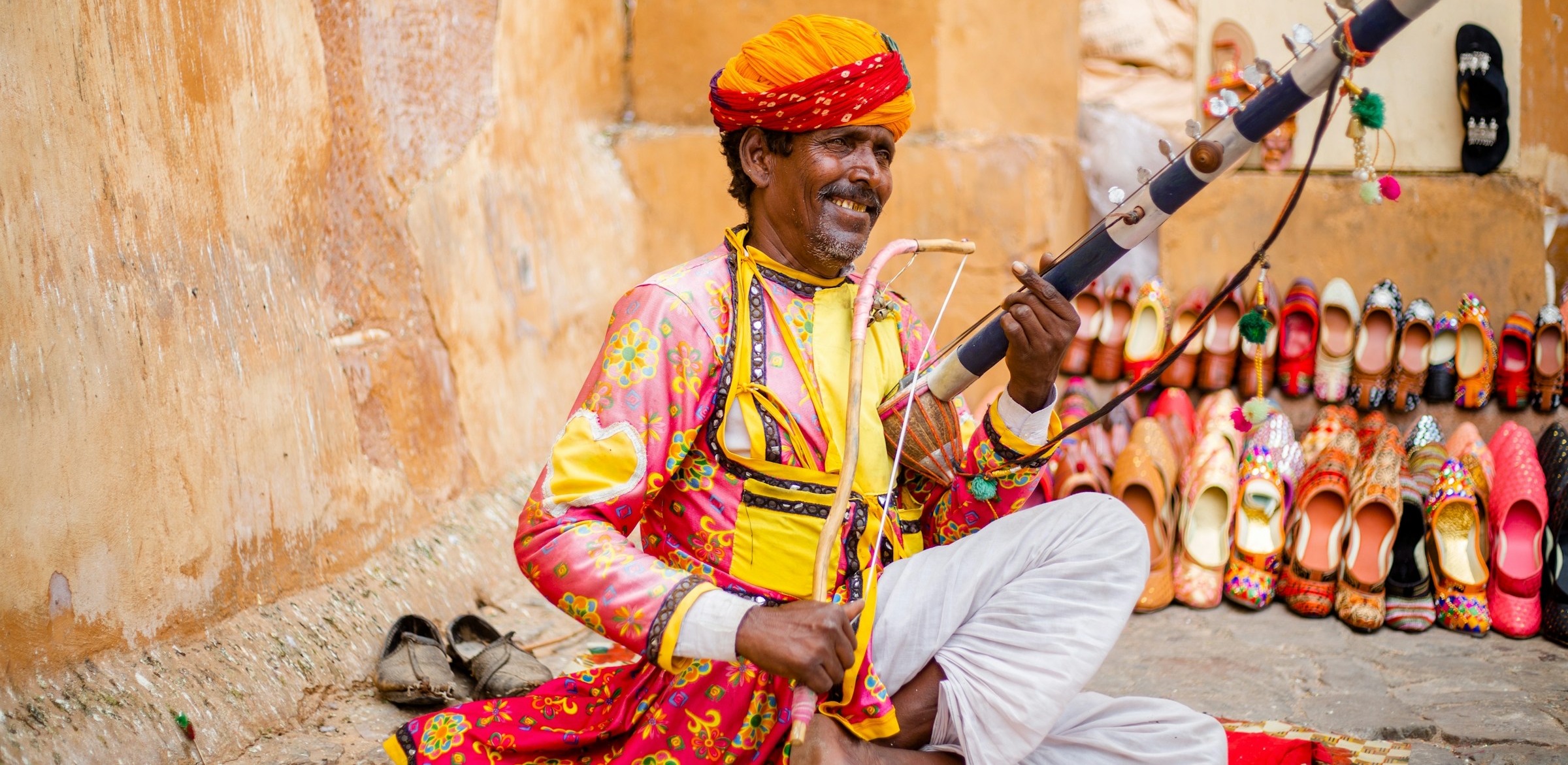
Rajasthan – like you have never seen before
Rajasthan
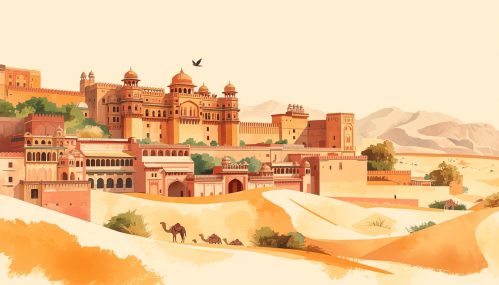
There’s a kind of travel that changes your address. And then there’s the kind that changes you — quietly, permanently, somewhere deep in the chest where you can’t quite point to it afterward. Rajasthan is the second kind.
You come back from Rajasthan different. Not dramatically different — not with a new philosophy or a shaved head. Just… rearranged. As if something in you that had been slightly out of tune for years has been, without your permission, tuned.
This isn’t a travel guide. Those exist in abundance and they will tell you bus times and budget hotels and the best months to visit. What this is — is an honest account of what happens to a person when they step into one of the most extraordinary places on earth. A civilization that built magnificence in a desert. A people who turned survival into art.
Come. The chai is hot. The forts have been waiting for you.
The Land That Still Belongs to Its Kings
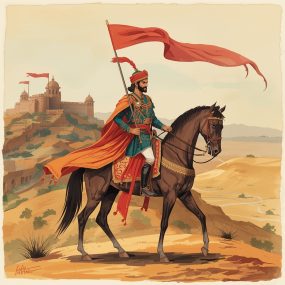
The name alone carries weight. Raja — king. Sthan — land. But Rajasthan isn’t simply named after its kings. It’s still soaked in them.
You feel it in the blood-red sandstone of Mehrangarh Fort rising 122 metres above Jodhpur — not perched on a hill so much as erupting from it, as if the earth itself decided to make a declaration. You feel it in the silence of Chittorgarh at dawn, 700 acres of plateau ruins where queens once chose fire over surrender and the air still carries something of that decision. You feel it in the unhurried dignity of a turbaned elder in a desert market, whose posture alone seems to say: my people built empires here.
The Rajput warrior clans who ruled this land for over a thousand years had a philosophy that’s difficult to find anywhere else in the world: that a kingdom worth dying for must also be worth living in. So their forts weren’t merely fortresses — every battlement has a carved balcony. Every war council room looks out over a garden. Beauty wasn’t optional. It was doctrine.
The kings are long gone. Their kingdom, somehow, remains. And no history book has ever quite done it justice.
A Living Museum (That No One Has Roped Off)
Most great museums put history behind glass and ask you not to touch. Rajasthan puts you inside it.
Jaisalmer — the Golden City, rising from the Thar Desert in honey-yellow sandstone — has been standing since 1156. And its fort is still home to 3,000 people who wake up, brew tea, argue, laugh, and sleep inside 12th-century walls. The fort isn’t preserved. It’s lived in. There’s a difference that hits you the moment you arrive — the smell of cardamom, the sound of children, a woman hanging laundry from a medieval window. Nine centuries of continuous life and not a velvet rope in sight.
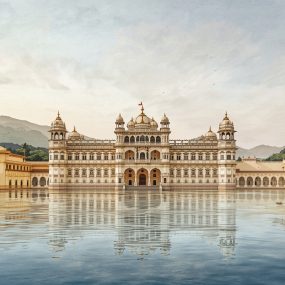
In Udaipur — the most romantic city in India, floating on its shimmering man-made lake like something from a dream you’d be embarrassed to describe — the City Palace holds 76 generations of royal history in a single complex. You walk through courtyards where coronations happened, past latticed marble windows through which queens watched the world while remaining unseen, into gardens designed to catch the exact quality of monsoon light. You don’t observe history here. You walk through it.
And then there’s Shekhawati, a region of painted merchant mansions that the world has almost entirely forgotten. Centuries-old havelis decorated floor-to-ceiling with frescoes where Hindu gods share wall space with British governors in top hats, where steam locomotives race alongside flying horses, where Krishna plays the flute next to a man talking on a telephone. The entire 19th-century world, painted on desert plaster by artists who found everything equally worth recording. It’s utterly extraordinary — and almost entirely empty of other tourists.
The Desert That Will Completely Surprise You
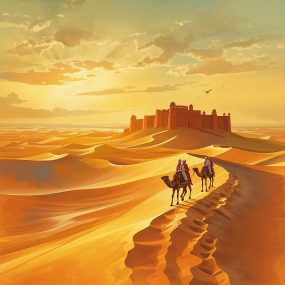
You’ve seen deserts in photographs. Endless beige. Heat shimmer. A landscape that seems designed to make you feel the meaninglessness of being alive. The Thar is not that desert.
The Thar is the most densely populated desert in the world. It is not an emptiness — it’s a civilization that learned to thrive in conditions most places would call uninhabitable. Ancient stepwells whose engineering still astonishes engineers today. Villages where peacocks wander between ochre mud-walled houses as casually as pigeons in a European square. Bishnoi communities near Jodhpur who have been protecting their blackbuck deer and khejri trees with religious devotion since the 15th century — one of the earliest conservation movements in human history, born not from environmentalism but from love.
Go to the Khuri dunes at dawn. Far from the tourist camps, out where it gets properly quiet. Climb to the top and wait. Watch the sand shift from silver-grey to apricot to burnished gold over the space of four minutes as the sun arrives. Somewhere in the distance, a camel bell sounds once and then doesn’t again. The sky holds one last planet before surrendering to blue. You won’t feel the urge to photograph it. You’ll just watch.
Stay a night in the desert interior. No tent — just a mat, a blanket, and above you the Milky Way so dense and close that it seems to press down toward you. The desert at midnight is one of the great silences of the world. It asks nothing of you except to be present inside it.
Color as a Philosophy of Living
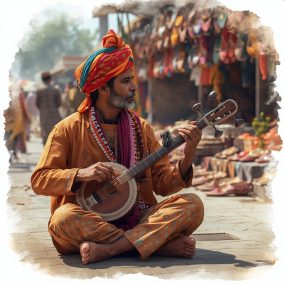
There’s a moment that finds almost every visitor to Rajasthan — usually within the first hour, sometimes the first ten minutes. You step out of a car, or round a corner into a bazaar, and your brain simply cannot process what it’s receiving. Not because it’s overwhelming in the way a Times Square is overwhelming. But because the color is so intentional. So confident. So completely unapologetic.
Rajasthan is the only place in the world where magenta and orange sit next to each other not as a design accident but as a philosophical statement. Where a woman in a scarlet skirt embroidered with tiny mirrors moves through a saffron-walled alley under a turquoise sky and the composition looks like someone painted it — and painted it without a single thought of restraint. Where the turbans men wear — crimson, royal blue, deep rose, vivid saffron — aren’t fashion choices but identity declarations, each color announcing clan, occasion, community with the precision of a spoken language.
This is not decoration. In a landscape of relentless, neutral beige, color in Rajasthan is resistance. Every bandhani-dyed cloth, every block-printed length of indigo cotton, every wave-dyed leheriya silk is both a refusal to be visually erased by the desert and an act of joy so habitual it has become inseparable from who these people are.
Bring your camera. It won’t be enough. Bring your eyes wide open. They will not be the same afterward.
Food That Deserves Its Own Dedicated Trip
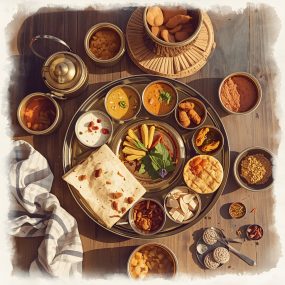
Rajasthani cooking is one of the great culinary contradictions of the world: born from scarcity, it achieved abundance. In a water-scarce desert where fresh produce was a seasonal luxury and preservation was the difference between life and death, cooks developed a cuisine of such depth and ingenuity that it now belongs among the great regional foods of the world.
Dal Baati Churma — the soul dish of Rajasthan — is three things and one thing simultaneously. Baati: dense wheat dough balls baked directly in an open fire until they’re crisp outside and soft within, then cracked open and drowned in an alarming amount of molten ghee. Dal: lentils slow-cooked with wild desert berries and spices over hours until the broth carries a depth that’s almost meaty. Churma: the baati crushed and sweetened with jaggery and more ghee until it blurs the line between bread and dessert in the most satisfying way possible. Eaten together off a single plate, it is desert philosophy made edible — sustaining, rich, built to last.
Laal Maas — the red meat curry — is fire in a bowl. Not aggressive fire, but slow, deep, complex fire. Its color comes from Mathania chillies grown only in a small region near Jodhpur, whose heat is profound but whose flavor is layered and almost fruity beneath the spice. It is a dish that demands you pay attention.
Ker Sangri — the combination of desert beans and dried berries that sustained whole communities through rainless years — is a revelation of what a civilization can make when it pays close enough attention to its own landscape.
The sweets alone would justify the journey. Ghevar: the honeycomb disc of fried flour soaked in sugar syrup and cream, eaten at festivals. Malpua in Pushkar, freshly fried and dipped in rose water. Rabdi so thick it holds its shape in the bowl.
Come hungry. Come very hungry.
Culture That Isn’t Performed for You
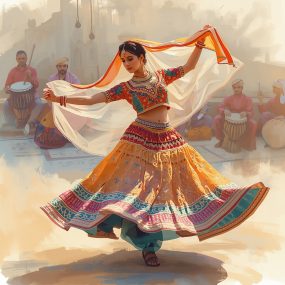
In most places you visit, culture is something packaged for the traveler — displayed in museums, scheduled on stages, explained by guides with lanyards. In Rajasthan, culture is simply the ongoing texture of daily life, and you are invited into it rather than positioned in front of it.
The Manganiyar musicians of the Thar Desert are hereditary musicians who have carried their tradition in their families for 700 years. They don’t perform for tourists — they perform for weddings, births, harvests, and the general ongoing necessity of music in a community’s life. If you’re lucky enough to hear them in their own context — a courtyard at midnight, a fire burning low, the desert stretching away in every direction — you’ll understand something about music that concert halls simply cannot teach. Their voices carry grief and joy at the same time, the way only music from a hard land can.
The Ghoomar — the signature dance of Rajasthani women — isn’t choreographed for audiences. It’s a women’s celebration, danced in circles that slowly, irresistibly accelerate until the embroidered skirt becomes a perfect horizontal wheel of color and mirror-light, the textile and the dancer becoming, briefly, one single spinning thing.
The Bhopa-Phad tradition — a single hereditary singer performing an all-night epic about the folk deity Pabuji in front of a painted cloth scroll, his wife holding an oil lamp to illuminate each relevant panel as the story moves — is among the rarest performance forms on earth. Fewer than 50 active practitioners remain. If you encounter one, you are in the presence of something almost impossibly old and almost impossibly alive.
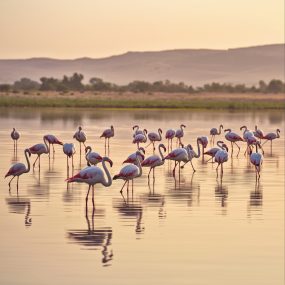
The Wildlife You Didn’t Come For (And Won’t Forget)
You didn’t come to Rajasthan for the wildlife. You came for the forts, perhaps, or the color, or the food. And then the tiger walked out of the trees and crossed the water, and everything else temporarily stopped mattering.
Ranthambore National Park — built around a 10th-century fort whose ruins rise dreamlike from the jungle canopy — is one of the finest places on earth to watch Bengal tigers living their actual lives. These are not shy, fleeing tigers. Decades of careful conservation have created tigers that are simply indifferent to human observers — magnificently, almost insultingly indifferent. A tigress resting on ancient fort steps in the morning light. A male walking deliberately across a shallow lake, his reflection moving with equal purpose beneath him. A mother with cubs in the tall grass, the cubs tumbling over each other with an innocence that makes their existence feel like a gift.
In the Jawai region near Pali, something even rarer: leopards sharing a granite boulder landscape with Rabari pastoralists in a coexistence that has lasted for generations without breaking down. The leopards move through the rocks at dusk. The Rabari women move through the same landscape at dawn with their camels. Each knows the other is there. Each gives way when it matters. It is one of the last places on earth where a large predator and a human community have worked out a genuine, functional peace — not by separating from each other, but by learning to share.
In the Bishnoi villages near Jodhpur, blackbuck deer and chinkara graze between houses as freely as dogs. Protected by a 500-year-old community covenant of extraordinary depth. Wildlife not behind a fence or within a boundary. Wildlife at home.
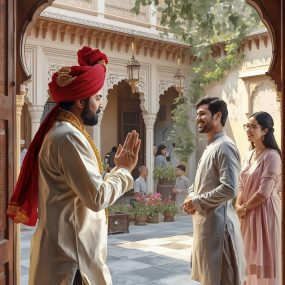
Hospitality That Feels Like Being in a Family
Atithi Devo Bhava. The guest is God. This is not a line on a tourism poster. In Rajasthan, it is a moral position — a value embedded so deeply in the culture that it operates even when no one is watching, even when there is nothing to gain, even when the host can barely afford what he’s offering.
In a desert where a stranger at the door might genuinely have been dying of thirst, hospitality was never a social grace. It was a survival covenant — the collective understanding that a community which welcomes strangers survives, and one that turns them away does not. The desert made generosity not just virtuous but necessary, and then the culture took over and made it sacred.
You will feel it everywhere. In the family-run haveli where the owner insists on showing you the rooftop herself and presses a second cup of chai into your hands before you’ve finished the first. In the village elder who calls you over to sit with him not because he wants anything from you, but because your presence in his community is simply an occasion for joy. In the desert camp host who stays up talking long past the hour he should have slept because the conversation became interesting, and interesting conversation is more valuable than sleep.
Most of us have experienced hospitality as a gesture — a kind one, perhaps even a genuine one, but still something offered and received across a small, polite distance. Rajasthani hospitality collapses that distance entirely. It isn’t a transaction or even a tradition. It’s closer to a theology. You will leave not feeling entertained, but — this is the only accurate word — loved.